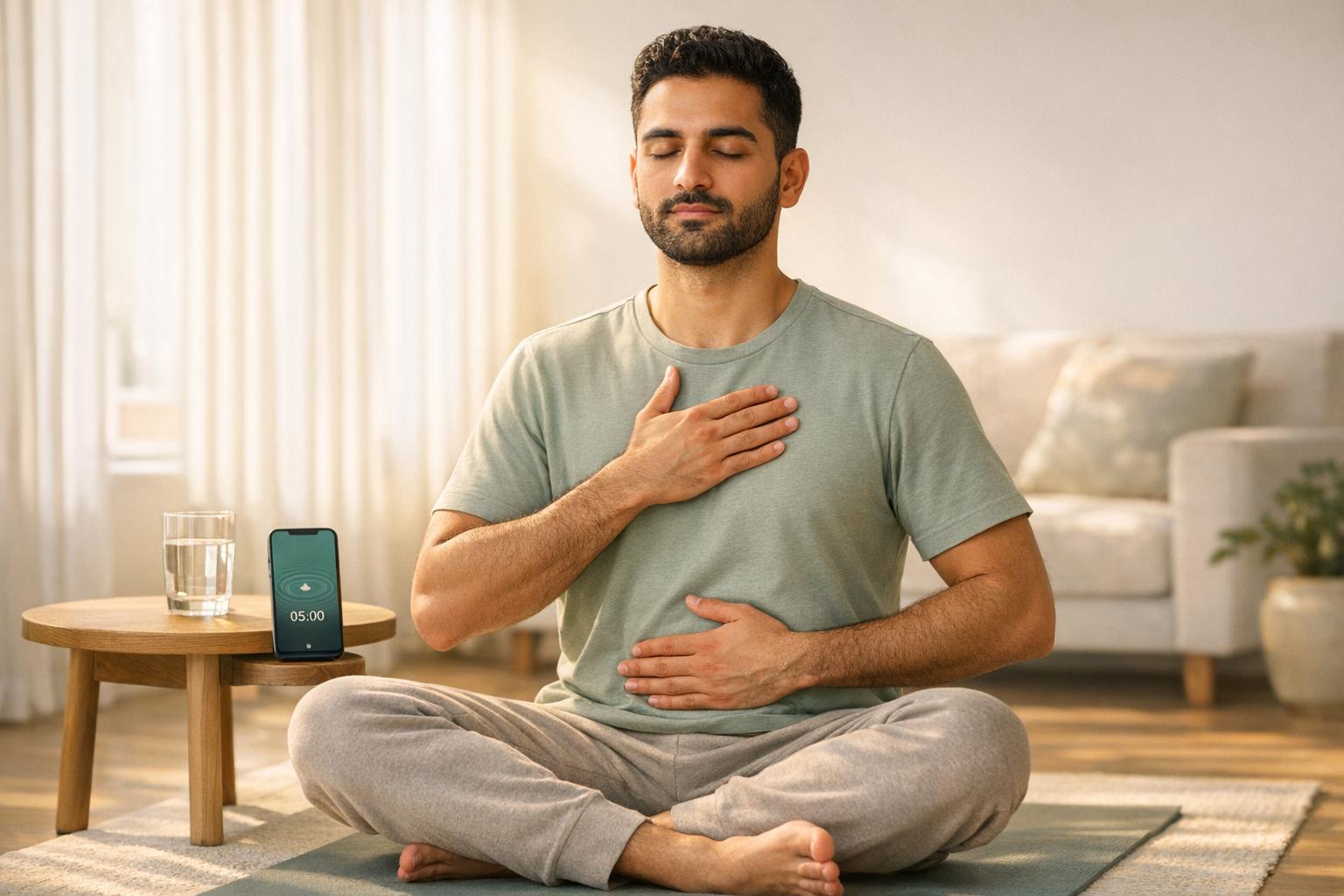
Science of Breathwork: Mental Health Benefits
Breathwork is a simple, science-backed way to improve mental health by controlling your breathing patterns. Research shows it can reduce stress, anxiety, and depression while boosting mood in just a few minutes a day. Techniques like cyclic sighing, box breathing, and slow breathing directly affect your nervous system, helping you feel calmer and more focused quickly.
Key Takeaways:
- What It Is: Breathwork involves deliberate breathing exercises to influence mental and physical well-being.
- Why It Works: It activates the parasympathetic nervous system, reducing stress and improving emotional regulation.
- Proven Benefits: Studies show breathwork can outperform mindfulness meditation in improving mood and reducing anxiety.
- Easy to Start: Techniques like cyclic sighing take just 5 minutes and require no equipment.
Breathwork is an accessible and effective tool for managing mental health challenges in today’s fast-paced world. Let’s dive into how it works and why it’s worth adding to your routine.
Essentials: Breathing for Mental & Physical Health & Performance | Dr. Jack Feldman
sbb-itb-4048306
Research on Breathwork and Mental Health
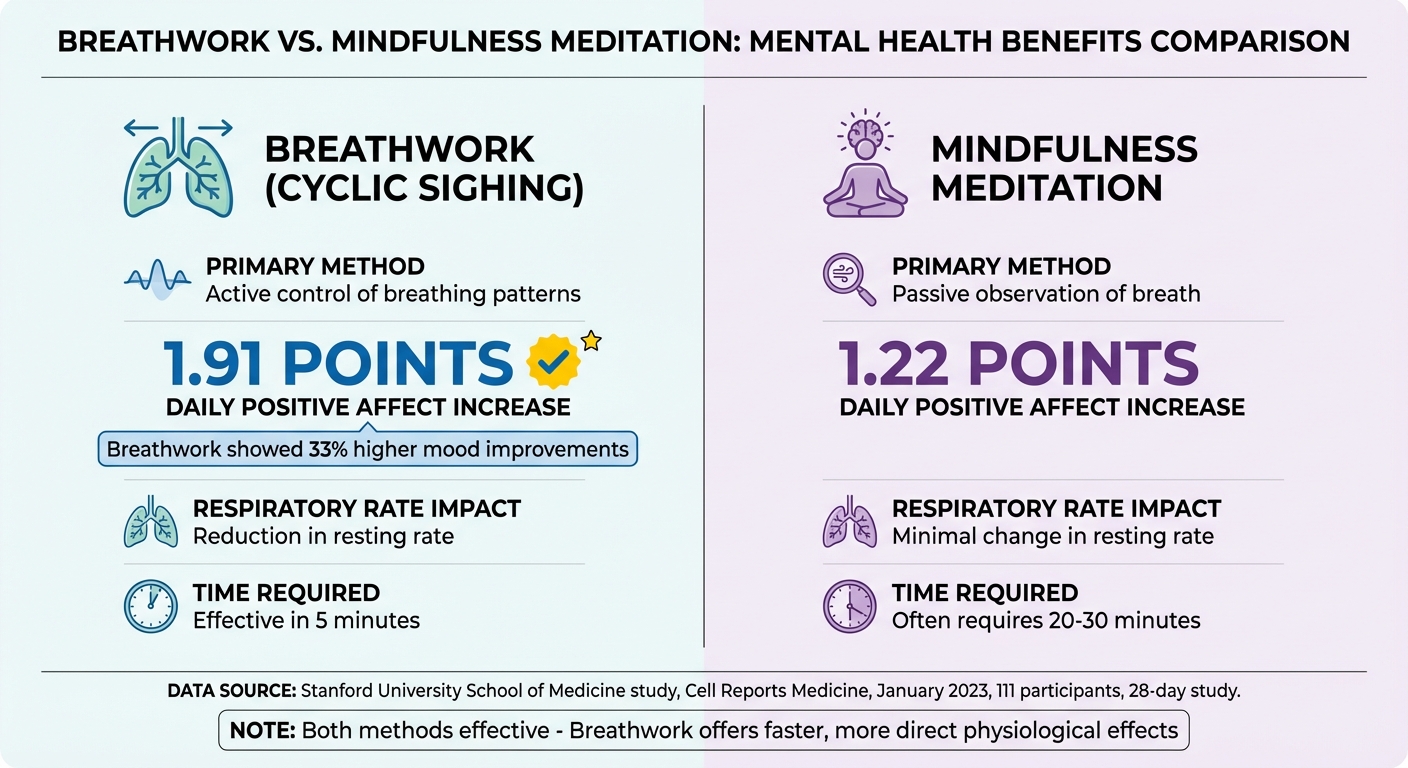
Breathwork vs Mindfulness Meditation: Mental Health Benefits Comparison
Scientific research shows that controlled breathwork can significantly improve mental health by influencing the nervous system, alleviating anxiety, and boosting mood. In some cases, it even outperforms mindfulness meditation in effectiveness.
Cyclic Sighing for Better Mood
In January 2023, a study from Stanford University School of Medicine, published in Cell Reports Medicine, followed 111 healthy participants over 28 days. Each person practiced 5 minutes of daily breathwork. Among the techniques, cyclic sighing - a method that involves a double inhale followed by a long exhale - showed the most noticeable results. Participants using this technique reported a 1.91-point increase in positive affect on a standardised scale, compared to 1.22 points in the mindfulness meditation group. Dr. David Spiegel, Associate Chair of Psychiatry and Behavioural Sciences at Stanford Medicine, explained:
"As soon as you notice what's going on in your body, your brain thinks, 'Oh no, this must be really bad,' and you get more anxious. It's like a snowball rolling downhill. Cyclic sighing stops the momentum."
This method works by reopening collapsed alveoli with the double inhale and efficiently expelling carbon dioxide during the extended exhale. This process activates the parasympathetic nervous system, slowing the heart rate and creating a calming effect. Other breathwork techniques also provide quick stress relief, but cyclic sighing stands out for its simplicity and effectiveness.
Slow Breathing for Stress Relief
The study compared cyclic sighing, box breathing, and cyclic hyperventilation with mindfulness meditation. Breathwork techniques consistently showed better results, with mood improvements around 33% higher than those achieved through mindfulness meditation. The key difference lies in the approach: breathwork directly influences the body’s physiology, while mindfulness relies on cognitive reappraisal.
Dr. Spiegel highlighted this advantage:
"Controlled breathing exercises may have a more rapid, more direct effect on physiology than mindfulness."
Breathwork techniques that focus on longer exhalations can calm the body in as little as 30 seconds. This makes them particularly useful for acute stress situations, such as preparing for a high-pressure presentation or managing sudden anxiety. These findings underline the practicality of breathwork in everyday stress management.
Breathwork vs. Meditation
The research also highlighted clear distinctions between breathwork and mindfulness meditation. Breathwork participants experienced more significant increases in positive emotions and greater reductions in resting respiratory rates compared to those practicing passive breath observation. By actively controlling breathing, breathwork offers a more immediate way to regulate the nervous system. Here's a comparison of the two approaches:
| Feature | Breathwork (Cyclic Sighing) | Mindfulness Meditation |
|---|---|---|
| Primary Method | Active control of breathing patterns | Passive observation of breath |
| Daily Positive Affect Increase | 1.91 points | 1.22 points |
| Respiratory Rate Impact | Reduction in resting rate | Minimal change in resting rate |
| Time Required | Effective in 5 minutes | Often requires 20–30 minutes |
With consistent practice, the benefits of breathwork accumulate, helping to build resilience against stress and anxiety over time. This makes it an efficient and practical tool for improving mental wellbeing in a fast-paced world.
How Breathwork Affects the Body and Brain
Research reveals that breathwork can impact mental health by directly influencing the autonomic nervous system and brain activity. These physiological changes pave the way for noticeable shifts in how the brain functions.
Effects on the Nervous System
Breathwork helps transition the body from a stressed state to a calmer one by engaging the autonomic nervous system. Slowing your breathing to around 4.5 to 6.5 breaths per minute - much slower than the typical 12 to 20 breaths per minute - activates the parasympathetic nervous system. This system governs the "rest and digest" state, countering the effects of stress and promoting relaxation. Slow, deliberate breathing stimulates pressure receptors in the chest, which help suppress the body's fight-or-flight response.
Interestingly, about 80% of vagus nerve fibres carry signals from the body to the brain, playing a key role in regulating emotions and stress responses. By altering breathing patterns, you can influence brain areas responsible for processing emotions. A critical measure of this shift is Heart Rate Variability (HRV), which reflects the body's ability to adapt to stress. Higher HRV levels indicate stronger parasympathetic activity and improved stress resilience. Breathing at a steady rate of about 5.5 breaths per minute creates harmony between respiratory and cardiovascular systems, enhancing vagal tone and fostering a sense of calm.
Brain Activity Changes During Breathwork
Beyond its effects on the nervous system, breathwork also alters brain function. Studies using EEG technology show that specific breathing techniques can shift brainwave activity across various frequency bands, including delta, theta, alpha, and beta. Slow breathing tends to increase delta, theta, and alpha waves, which are linked to deep relaxation, emotional regulation, and focused attention. At the same time, it reduces beta waves in the frontoparietal cortex, a change associated with lower anxiety and a greater sense of calm.
Rhythmic breathing, in particular, has been shown to amplify theta rhythms with a moderate effect size of 0.63, while significantly reducing alpha power with an effect size of 1.70 during states of deep relaxation. These shifts suggest a movement from normal waking consciousness to a more meditative state. Breathwork also influences the balance of oxygen and carbon dioxide in the blood, adjusts pH levels, and enhances cortical blood flow. Additionally, it has been linked to lower levels of salivary cortisol (the stress hormone) and blood lactate, both of which are indicators of reduced physiological stress. For seasoned practitioners, advanced breathing methods can even boost gamma waves, which are associated with heightened focus and advanced cognitive processes.
Adding Breathwork to Your Daily Routine
Breathwork has proven benefits backed by science, but to truly reap its rewards, consistency is key. The great thing? Breathwork is flexible - it doesn’t require equipment, costs nothing, and even just five minutes a day can help improve your mood and ease anxiety. Let’s dive into some beginner-friendly practices and explore how communal breathwork can enhance your routine.
Simple Breathwork Practices for Beginners
If you're new to breathwork, starting with straightforward techniques can make all the difference. One of the most effective methods for quick stress relief is cyclic sighing. Studies show it significantly boosts positive emotions compared to mindfulness meditation.
Here’s how to do a physiological sigh:
- Inhale until your lungs are about 70% full.
- Take a short second inhale.
- Exhale slowly over 4–6 seconds.
Each cycle takes around 30 seconds and has an almost instant calming effect. If you're dealing with acute stress - like before a big meeting or a tough conversation - try one to three cycles (30 to 90 seconds) for a quick mental reset.
"This technique [physiological sigh] can shift you out of fight-or-flight in seconds. It's a rapid and reliable reset."
- Guy Fincham, Founder of the Breathwork Lab, Brighton & Sussex Medical School
Other beginner-friendly techniques include:
- Box breathing: This involves a steady rhythm of inhaling, holding, exhaling, and holding again. It’s a method famously used by Navy SEALs to maintain calm and focus.
- Coherent breathing: Here, you breathe in and out for equal durations - usually six seconds per breath - without pausing.
- Diaphragmatic breathing: Focus on expanding your abdomen rather than your chest. This activates the vagus nerve, promoting relaxation and activating the "rest and digest" response.
If at any point you feel dizzy or uncomfortable, pause the practice immediately.
Breathwork at Wellness Events
Adding breathwork to your daily routine can become even more engaging through group experiences. Practising in a communal setting not only encourages relaxation but also helps build a sense of shared purpose. These group sessions can strengthen your commitment to regular breathwork and expose you to new techniques.
For example, the Well B Festival in Dubai, hosted at Meydan Racecourse, offers a perfect environment to explore breathwork. With dedicated zones for meditation and sound healing, participants can immerse themselves in various techniques over the festival’s three-day schedule. This setup emphasises "breathing well" as a long-term habit rather than a short-term fix for stress.
Joining such events connects you with others who value mental health and wellness, making it easier to stay consistent with your practice while discovering fresh approaches to breathwork.
Conclusion
The combined findings from various studies highlight the effectiveness of breathwork in improving mental health. Research consistently supports its benefits, with meta-analyses of 517 patients showing that pranayama significantly reduces symptoms of PTSD, depression, and other non-psychotic disorders. These reductions are reflected in standardised mean differences ranging from -0.27 to -0.35. Additionally, slow-paced breathing has been shown to mitigate anxiety even after stressful events, while improving midfrontal alpha asymmetry - a brain marker associated with better emotional regulation. In the face of global mental health challenges, these techniques offer a practical, evidence-based route to enhanced wellbeing.
Breathwork’s effectiveness stems from its direct impact on the nervous system. Breathing at a rate of 0.1 Hz (about six breaths per minute) optimises cardiovascular resonance and vagal activation, facilitating communication between the body and brain through the vagus nerve. Around 80% of vagal fibres are engaged during this process, amplifying its benefits. These measurable effects align with findings from earlier studies, such as the meta-analysis demonstrating significant reductions in PTSD, depression, and anxiety. Beyond the data, real-world applications are equally promising - large-scale research involving 400 participants revealed that 75-76% experienced relaxation and positive emotional shifts from rhythmic breathing.
"Breathwork may serve as both a preventive and adjunctive therapy for chronic stress, anxiety, and depression, given its potential to target key risk factors and produce clinically relevant outcomes." - Adam Siebieszuk, Department of Physiology, Medical University of Białystok
One of breathwork’s greatest strengths is its accessibility. It requires no special equipment, extensive training, or significant time commitment. Just 5 to 10 minutes of daily practice can lead to noticeable improvements in mood and stress levels. Whether it’s incorporating cyclic sighing into your morning routine or practising coherent breathing before sleep, consistency is the key to unlocking these benefits.
For those looking to deepen their practice, community events such as the Well B Festival offer an excellent opportunity. Held at the Meydan Racecourse, this festival transforms breathwork into a shared experience, blending scientific insights with communal activities. With dedicated zones for meditation and sound healing, it turns breathwork into a collective journey towards better mental health.
FAQs
How often should I practise breathwork to feel results?
Consistently practising breathwork, whether daily or a few times a week, can help lower stress levels and improve how you manage emotions. Research indicates that committing to 10-minute sessions over several weeks can make a real difference. The key is sticking to a regular schedule to see the benefits.
Which breathwork technique is best for anxiety in the moment?
When it comes to calming anxiety quickly, slow, deep breathing is one of the most effective techniques. Breathing at a steady pace - around six breaths per minute - can help soothe the mind. This method works by activating the parasympathetic nervous system, which is responsible for promoting relaxation and a sense of calm.
Is breathwork safe for everyone, including people with asthma?
Breathwork is considered safe for the majority of people. However, if you have a respiratory condition such as asthma, you should approach it with care. Some techniques might not be appropriate for your situation. To prioritise your well-being, it's best to consult a medical professional before beginning any breathwork practice.