
How Breath Retention Improves Fitness
Breath retention, or holding your breath, can improve your fitness and mental focus in several ways:
- Boosts respiratory strength: Holding your breath trains your diaphragm and intercostal muscles, making your breathing more efficient during exercise.
- Increases oxygen efficiency: It triggers your spleen to release red blood cells, improving oxygen delivery by up to 9.6%.
- Builds CO₂ tolerance: Helps delay the urge to breathe, allowing you to perform longer and more intense workouts.
- Enhances endurance: Studies show improvements in sprint performance, breath-hold duration, and aerobic capacity.
- Improves mental resilience: Helps you stay calm under pressure by training your nervous system to handle stress better.
Start with simple techniques like diaphragmatic breathing, box breathing, or static holds. Avoid training alone or in water for safety. With consistent practice, you can strengthen your body and mind while boosting overall performance.
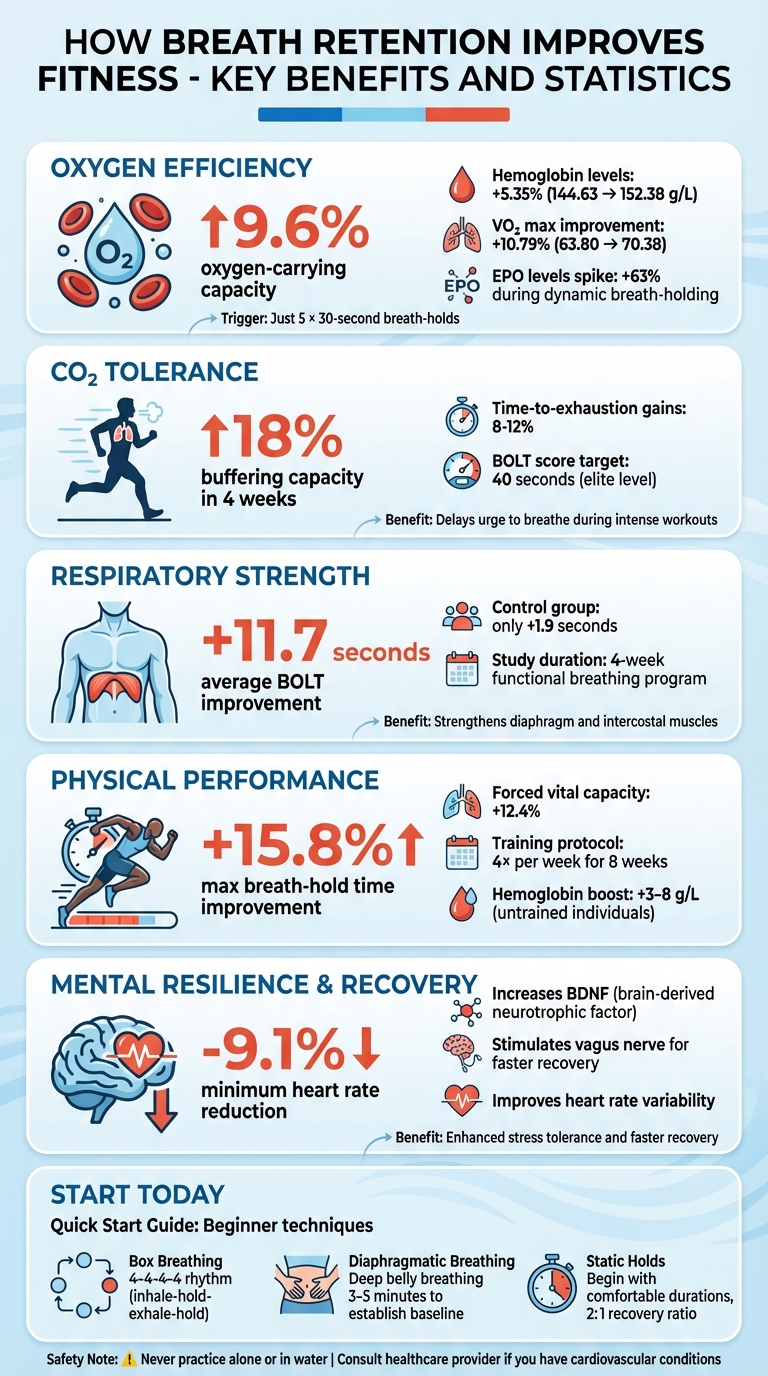
How Breath Retention Improves Fitness: Key Benefits and Statistics
BREATH-HOLD TRAINING in Strength & CONDITIONING | David Jackson at UKSCA Conference 2023
sbb-itb-4048306
How Breath Retention Enhances Physical Performance
Holding your breath isn't just a survival mechanism - it can actually supercharge your fitness. Studies reveal that it improves oxygen delivery, boosts endurance, and strengthens respiratory muscles.
Improved Oxygen Efficiency and Red Blood Cell Production
When you hold your breath, your sympathetic nervous system kicks in, causing your spleen to release concentrated red blood cells into your bloodstream. This natural boost - sometimes called "blood doping" - can increase your blood's oxygen-carrying capacity by 2.8% to 9.6%. And here's the kicker: even as few as five 30-second breath-holds can trigger this effect.
A fascinating study conducted between 2022 and 2024 by researchers Dajana Zoretic, Nada Grcic‐Zubcevic, and Katarina Zubcic at the University of Zagreb tracked elite male swimmers over an eight-week breath-holding programme. The results were impressive: haemoglobin levels rose by 5.35% (from 144.63 to 152.38 g/L), and VO₂ max - the gold standard for measuring aerobic fitness - increased by 10.79% (from 63.80 to 70.38). Additionally, dynamic breath-holding during exercise spiked serum EPO levels by up to 63%. The Bohr effect also plays a role here, helping haemoglobin release oxygen more efficiently to fuel working muscles.
Building CO₂ Tolerance for Endurance
Breath retention doesn't just help with oxygen - it also trains your body to handle carbon dioxide (CO₂) more effectively. Fun fact: the urge to breathe is more about rising CO₂ levels than dropping oxygen. By increasing your CO₂ tolerance, you can perform better under pressure. Regular training can boost your body's buffering capacity by up to 18% in just four weeks, with athletes reporting time-to-exhaustion gains of 8% to 12%.
This improved CO₂ tolerance also means your respiratory muscles work smarter, not harder, during intense activity. These muscles can demand up to 15% of your total cardiac output during exercise. Strengthening them through breath-holding can prevent the metaboreflex - a phenomenon where blood is diverted from your legs to assist strained breathing. Want to track your progress? Try the Body Oxygen Level Test (BOLT): exhale normally and time how long you can hold your breath until you feel the first strong urge to inhale. A score of 40 seconds is considered elite.
Strengthening the Diaphragm and Lung Capacity
Breath retention isn't just about oxygen and CO₂; it also acts as a workout for your respiratory muscles. When you hold your breath, your diaphragm and intercostal muscles engage in isometric contractions, strengthening them for endurance. As Erwan Le Corre, founder of BreathHoldWork®, puts it:
"Breath-holding itself can serve as one of the most powerful forms of respiratory muscle conditioning. It's the respiratory equivalent of lifting heavy weight without moving the bar".
In January 2025, researchers from the University of Nevada and University of Illinois Chicago studied 16 recreational runners who completed a four-week functional breathing programme. This included daily breath exercises and nasal-only breathing during low-intensity training. The results? Participants increased their BOLT times by an average of 11.7 seconds, compared to just 1.9 seconds in the control group. These gains in respiratory efficiency allow athletes to train harder while conserving energy for other physical demands.
Mental Benefits of Breath Retention
Breath retention reshapes the way your mind responds to stress by creating a controlled challenge that forces your brain to adapt. This intentional discomfort strengthens the prefrontal cortex, helping you manage emotions and maintain calm under pressure. As Erwan Le Corre, founder of BreathHoldWork®, puts it:
"Resilience is not a trait, but a skill. And like any skill, it can be built, refined, and stabilized through deliberate training of the nervous system under internal physiological load".
Building Mental Resilience and Improving Focus
The mental benefits of breath retention stem from a two-step process. First, it triggers a sympathetic response, known as the "fight or flight" mode. This is followed by a parasympathetic reset, which enhances heart rate variability and boosts mental clarity. By repeatedly facing the discomfort of air hunger, you raise your tolerance for stress, making it easier to stay composed during intense situations, whether in workouts or daily life.
Breath retention also improves CO₂ tolerance, which helps reduce feelings of panic and enhances focus during moments of discomfort. Additionally, it increases levels of brain-derived neurotrophic factor (BDNF), a protein crucial for learning and neural flexibility. In simple terms, this means you can stay present and maintain control even when your body is under strain, which also aids in quicker recovery.
Supporting Recovery with Breath Retention
Recovery is all about how efficiently your nervous system transitions from stress to repair mode. Breath retention helps speed up this shift by stimulating the vagus nerve, which sends calming signals throughout your body. This process helps regulate your heart rate and lower blood pressure. It also promotes the release of Human Growth Hormone (HGH), which is essential for muscle repair and growth.
A 2024 pilot study published in Sports (Basel) observed participants who engaged in land-based static apnoea training four times a week for eight weeks. The findings revealed a 9.1% reduction in minimum heart rate, indicating improved autonomic function and faster cardiovascular recovery. Guy Fincham, who leads the breathwork lab at Brighton & Sussex Medical School, highlights the value of this practice:
"Breathwork is one of the simplest and profoundly effective tools we have for calming the nervous system and boosting physical and mental resilience".
These mental benefits work hand-in-hand with the physical advancements gained from breath retention, offering a comprehensive boost to overall performance and recovery.
Breath Retention Techniques for Fitness
Beginner Breath Retention Practices
Starting breath retention doesn't require fancy equipment or advanced skills. The key is understanding that your need to breathe is driven by rising carbon dioxide (CO₂) levels, not a lack of oxygen. Once you grasp this, the practice feels less daunting and more approachable.
Begin with diaphragmatic breathing to establish proper technique. Sit upright, place one hand on your belly, and breathe in through your nose. Feel your abdomen rise as you inhale and fall as you exhale. This activates your diaphragm - your main breathing muscle - and helps ease tension in your neck and shoulders. After 3–5 minutes of calm, focused breathing, you're ready to try your first breath hold.
A good starting point is The Stange Test. Take a relaxed breath to about 80% of your lung capacity - avoid inhaling as deeply as possible - and hold until you feel the first clear urge to exhale. This isn’t about pushing through discomfort or waiting for strong diaphragm contractions. When you feel that initial signal, exhale smoothly and return to normal breathing. Ensure your recovery time is at least double the length of the hold. This test helps measure your respiratory efficiency and sets a baseline.
To specifically work on CO₂ tolerance, try The Genchi Test. Exhale naturally until you reach your normal resting point, then hold your breath until you feel the first urge to inhale. This method directly trains your body to handle CO₂ buildup. Repeat either test 3–5 times per session, allowing enough recovery between attempts.
For a structured approach, try Box Breathing. This technique uses a 4-4-4-4 rhythm: inhale for 4 seconds, hold for 4 seconds, exhale for 4 seconds, and hold again for 4 seconds. It’s especially effective after workouts, as it activates your parasympathetic nervous system, helping to lower your heart rate and speed up recovery. Research shows that practising static breath-holds four times a week for eight weeks can improve maximum breath-hold time by 15.8% and increase forced vital capacity by 12.4%.
Adding Breath Retention to Your Workouts
Once you're comfortable with the basics, incorporating breath retention into your workouts can amplify its benefits. Dynamic breath-holding, done while moving, creates stronger physiological effects compared to static holds. When paired with light exercise, repeated maximal breath-holds can increase haemoglobin levels by 3–8 g/L in those without prior training.
You can use breath retention as part of your warm-up. Before running or cycling, perform 5–6 maximal breath-holds during 10 minutes of light activity, like walking or easy pedalling. This approach triggers splenic contraction, releasing stored red blood cells into circulation and boosting your peak oxygen uptake (VO₂peak). The haemoglobin increase can last for up to 10 minutes after the session.
Building on your static breath-hold practice, you can also use breath retention during strength training to improve core stability. A brief hold during heavy lifts - known as the Valsalva manoeuvre - increases intra-abdominal pressure, which helps stabilise your spine. For safety, inhale during the lowering (eccentric) phase, hold and brace your core during the lift, and then exhale sharply during the lifting (concentric) phase. Beginners should avoid long holds under heavy loads, as this can dangerously raise blood pressure.
For cardio or running, use rhythmic breathing patterns instead of extended holds. A 3:2 ratio (inhaling for 3 steps, exhaling for 2) helps engage your diaphragm and maintain a steady pace without over-breathing. Stick to nasal breathing during moderate-intensity efforts (Zone 2), but switch to mouth breathing during high-intensity sessions.
Never practise breath retention in water unless under professional supervision. The risk of blacking out and drowning is significant. Always train on dry land, and avoid hyperventilating before a hold. Rapid, deep breaths artificially lower CO₂ levels, which can suppress your body’s natural warning signs.
Breath Retention at Well B Festival

Well B Festival takes the benefits of breath retention and brings them to life in an interactive, event-driven setting. This unique event offers a chance to apply the techniques discussed here, helping you boost both fitness and mental resilience through hands-on experiences.
Fitness Zones and Challenges
Happening from 3–5 April 2026 at Meydan Racecourse in Dubai, the festival features various zones where you can hone your breath retention skills. The RecoverBee hub is perfect for practising techniques like box breathing during recovery activities such as ice baths. These exercises help regulate your nervous system and manage stress responses effectively.
Scientific studies highlight that sequential breath-holding can boost haemoglobin and red blood cell levels by 4%, thanks to splenic contraction. Additionally, immersing your face in cold water (10–15°C) while practising breath retention triggers the trigeminocardiac reflex, which slows your heart rate and conserves oxygen.
For high-energy activities at Hive Rocks or Buzz Camps, try warming up with the "5-Hold" protocol. This involves five maximal breath-holds with two-minute recovery intervals over a 10-minute session. This approach may enhance your VO₂ peak by up to 5% through splenic contraction. Dynamic breath-holding before endurance exercises has also been shown to elevate erythropoietin (EPO) levels by 63%, compared to 16% achieved with static holds.
Once you've pushed your physical limits, you can dive deeper into the science and techniques at expert-led seminars.
Expert-Led Seminars
The Hive Minds stage is the go-to spot for workshops and panels led by specialists in movement science, resilience, and health. These sessions provide practical insights into advanced breathwork techniques. For a more relaxed experience, check out the Bee Well Zone, a dedicated space for daily breathwork and meditation sessions.
Kickstart your day with sunrise breathwork at the Flight Deck Main Stage, beginning at 6:30 AM. These guided sessions are designed to prepare your body for the festival’s high-energy workouts.
"Well B Festival is designed to move with you. You can go hard, slow things down, learn, recover and then jump back in again. It is not about ticking boxes, it is about creating moments."
– Toby Harris, Co-Founder, Well B Festival
The festival also offers family-friendly perks, including free entry for children under 12 when accompanied by an adult, as well as discounted Early Bee Tickets.
Safety Tips for Breath Retention
Breath retention can improve fitness and mental focus, but it’s crucial to approach it with care. Without proper precautions, these techniques can lead to severe consequences. Understanding potential risks and following safety measures is essential for practising safely.
Key Safety Considerations
The golden rule? Never train alone, especially near water. Water-based breath retention carries a high risk of blackouts. This happens because your body’s urge to breathe is triggered by rising CO₂ levels - not oxygen deprivation. Over-ventilating before a breath hold can suppress this urge, leading to sudden unconsciousness.
Always practise in a safe, controlled environment. A seated or lying position is best to minimise injury risks if dizziness or a hypoxic blackout occurs. Be alert to warning signs of oxygen deficiency, such as bluish skin, lips, or nails, lightheadedness, confusion, or tingling sensations. If you notice any of these, stop immediately and resume normal breathing.
In cases of severe symptoms - like seizures lasting more than five minutes, persistent breathing difficulties, or back-to-back seizures - seek medical help right away.
If you have certain health concerns, extra caution is needed. Conditions like cardiovascular disease, high blood pressure, epilepsy, severe asthma, pregnancy, or a history of strokes require consulting a healthcare professional before attempting breath retention. Statistics show that around 1 in 10 people will experience a seizure in their lifetime, making precautions even more critical.
By following these safety practices, you can build a secure foundation for your breath retention journey.
Gradual Progression and Consistency
Start small and progress gradually. Begin with short, comfortable breath holds, paired with 2–3 minutes of slow diaphragmatic breathing (such as inhaling for 5 seconds and exhaling for 10 seconds). This helps calm your nervous system without depleting CO₂ levels. After each hold, perform 2–3 quick "hook breaths" to restore oxygen and CO₂ balance.
Prioritise inhale holds over exhale holds to optimise oxygen intake. Stick to the 2:1 recovery rule - resting for at least twice the duration of your breath hold - to allow CO₂ levels to stabilise. Instead of focusing solely on increasing hold times, try using "CO₂ tables." These involve shortening rest intervals between fixed-length holds, helping you build tolerance in a structured way.
"The single, non-negotiable rule for breath-holding training is to Never Practise Alone, especially not in water." – Biology Insights
Pay attention to your body. Stop immediately if you feel lightheaded, dizzy, or confused. Diaphragmatic contractions signal rising CO₂ levels but aren’t an immediate danger. However, avoid pushing past intense discomfort. A steady, systematic approach reduces risks while enhancing endurance and recovery. With consistent practice, you’ll build both physical capacity and mental resilience over time.
Conclusion
Breath retention offers a powerful way to enhance endurance, sharpen focus, and speed up recovery. By increasing your CO₂ tolerance, strengthening your respiratory muscles, and improving how efficiently your body uses oxygen, these techniques can change how you perform under physical stress. Research even shows that consistent practice can lead to noticeable improvements in breath-hold duration and lung capacity.
But the benefits don’t stop at the physical. Breath retention also builds mental resilience, helping you stay calm under pressure and turning instinctive panic into deliberate control.
You can dive deeper into these practices at Well B Festival, hosted at Meydan Racecourse, Dubai. The festival features expert-led seminars and interactive fitness challenges spread across 16 unique zones. Whether you’re just starting or looking to fine-tune your skills, this event creates a welcoming space to learn directly from specialists. It’s an opportunity to incorporate breath retention into your fitness journey in a hands-on, engaging way.
Start small - try box breathing after your workouts and gradually increase your breath-hold times. With dedication and the right guidance, you’ll tap into new levels of physical and mental strength that go well beyond the gym.
FAQs
How often should I practise breath retention to see results?
Practising breath retention consistently - whether daily or several times a week - can lead to measurable improvements in your performance and endurance. Begin with short sessions, around 30 seconds to a minute, and slowly extend the duration as your comfort level increases. Staying consistent is essential to achieving long-term results.
Is breath retention safe if I have asthma or high blood pressure?
Breath retention poses potential risks for individuals with asthma or high blood pressure. It can cause spikes in blood pressure and lead to respiratory stress. To ensure safety and prevent complications, this practice should only be attempted under proper medical supervision.
What’s the simplest way to add breath holds to running or gym workouts?
To incorporate breath holds into your workouts, start with controlled breathing techniques like diaphragmatic breathing. Take slow, deep breaths and practice holding your breath briefly after inhaling or exhaling during exercises or runs. For instance, you can pause for a few seconds at the peak of each inhale or exhale. This simple addition can help improve your oxygen efficiency and boost endurance, and the best part? It doesn’t require any special equipment, making it easy to add to your routine.