How Mobility Boosts Functional Fitness
Mobility is the backbone of functional fitness - it helps you move better, feel stronger, and reduce the risk of injuries. Functional fitness mimics everyday actions like lifting, squatting, or twisting, and mobility ensures your joints and muscles work efficiently for these movements. Here's what you need to know:
- Functional Fitness: Focuses on movements like squats, lunges, and deadlifts to make daily tasks easier.
- Mobility vs. Flexibility: Mobility is about active joint control, while flexibility is passive stretching.
- Why Mobility Matters: It improves joint health, stability, balance, and coordination while reducing injury risks.
- Key Exercises: Hip flows, ankle rocks, thoracic rotations, and dynamic stretches for the lower body, upper body, and posterior chain.
- Routine Tips: Add 10–15 minutes of mobility work to your daily routine, or dedicate 3–5 focused sessions weekly.
For a hands-on experience, the Well B Festival (3–5 April 2026, Meydan Racecourse, Dubai) offers workshops, recovery zones, and bootcamps to help you integrate mobility into your fitness journey. Start small, stay consistent, and prioritise quality movement - your body will thank you.
Understanding Functional Fitness and Mobility
What is Functional Fitness?
Functional fitness focuses on exercises that mirror the movements we use in daily life - lifting, pushing, pulling, and reaching. Unlike traditional gym routines that isolate specific muscles, functional fitness activates multiple joints and muscles to make everyday tasks easier. Think of squats as a stand-in for sitting and standing, lunges for climbing stairs, or deadlifts for safely lifting heavy objects. As nib explains, "Functional fitness isn't just about what you can do at the gym, it's about making everyday movement feel easier".
What is Mobility?
Mobility refers to the ability to move a joint through its full range of motion with ease and without assistance. It differs from flexibility, which involves passive or assisted movement, like using your hand to stretch a finger back. Mobility, on the other hand, depends on the muscles that control the joint. In functional training, mobility is essential for performing foundational movements - push, pull, hinge, squat, lunge, rotate, and carry - efficiently. Without active joint control, functional exercises can lead to compensations that compromise technique and performance.
Why Mobility Matters for Functional Fitness
When mobility is limited, your body compensates with improper movements - arching your back or letting your knees collapse, for example. These compensations not only increase the risk of injury but also hinder proper form.
"Functional fitness mobility is important because it enables you to move at the full range of motion, which leads to performing exercises with proper technique and form."
– Sergii Putsov, Head of Sport Science, PhD, Torokhtiy
Incorporating mobility work into your routine boosts blood flow to muscles, helps reduce post-workout inflammation, and speeds up recovery. Spending just 10–15 minutes a day on mobility exercises can make a noticeable difference in how well you move and perform.
Benefits of Mobility for Functional Fitness
Better Joint Health and Range of Motion
Mobility training plays a crucial role in keeping your joints healthy and improving their range of motion. It promotes better circulation, counteracts the natural loss of joint fluid that comes with ageing, and helps maintain overall comfort. Unlike passive flexibility, mobility demands active engagement, requiring your muscles and joints to work together in harmony. Harrison Lessans, a Future Coach, explains:
"The tighter your muscles get, the more pressure they put on the tendons. The tendons connect at the joints, limiting the range of motion and causing discomfort."
Practices like Controlled Articular Rotations (CARs) are particularly effective, as they train your nervous system to control movement at the extremes of your joint's range. This helps create smoother, more controlled motions. If you're focusing on mobility, prioritising areas like the shoulders, thoracic spine, and hips can yield the best results. Aim for 10–15 minutes of mobility exercises three to four times a week, making sure to stop when you feel pressure - not pain. Improved joint function from these exercises also supports better balance and overall control.
Improved Stability, Balance, and Coordination
Healthy joints are the foundation for better stability, and mobility training helps refine this even further. By improving joint alignment and addressing imbalances, mobility reduces instability. Dynamic, multi-joint movements challenge your proprioception - your body's ability to sense its position in space - leading to more efficient and fluid movement patterns. Additionally, strengthening stabiliser muscles through their full range of motion provides a solid base for exercises that demand balance, like single-leg deadlifts or lunges. Regular mobility work also reduces the likelihood of falls. As Harrison Lessans points out, "Exercise works on the principle of specificity. What we repeat, we improve".
Injury Prevention and Recovery
Enhanced joint health and stability naturally lower the risk of injuries. Poor mobility often forces your body into awkward movement patterns, which can lead to tight hips, back pain, or achy knees. Mobility training helps restore proper alignment and relieves tension where tendons connect to joints, reducing discomfort and preventing injuries before they even happen. Whether you're recovering from a strain or simply looking to stay injury-free, mobility work is a key part of the equation.
15-Minute Daily Mobility Workout (No Equipment)
Key Mobility Exercises for Functional Fitness
Now that the advantages of mobility are clear, it’s time to take action. Below, you’ll find exercises designed to target the three key areas of functional movement: the lower body, upper body, and posterior chain. These movements can help you improve how you move in daily life and during workouts.
Lower Body: Squats and Hip Mobility Drills
To perform effective squats and lunges, you need mobility in your hips, knees, and ankles. The 90/90 Hip Flow is a great way to work on hip rotation. Sit with both knees bent at 90°, and rotate from side to side while maintaining an upright spine. For an added challenge, switch sides without using your hands for support [9, 11, 12]. The Couch Stretch is perfect for loosening tight hip flexors. Place your back foot on a wall or bench while kneeling on the opposite leg, engage the glute of your back leg, and tilt your pelvis forward.
To improve ankle mobility, try Ankle Rocks: stand facing a wall, keep your foot flat, and drive your knee toward the wall while keeping your heel grounded. This movement enhances dorsiflexion, crucial for achieving deeper squats [9, 11]. Perform 8–12 reps per side for dynamic drills and hold stretches for 20–40 seconds.
Upper Body: Push-ups and Shoulder Mobility
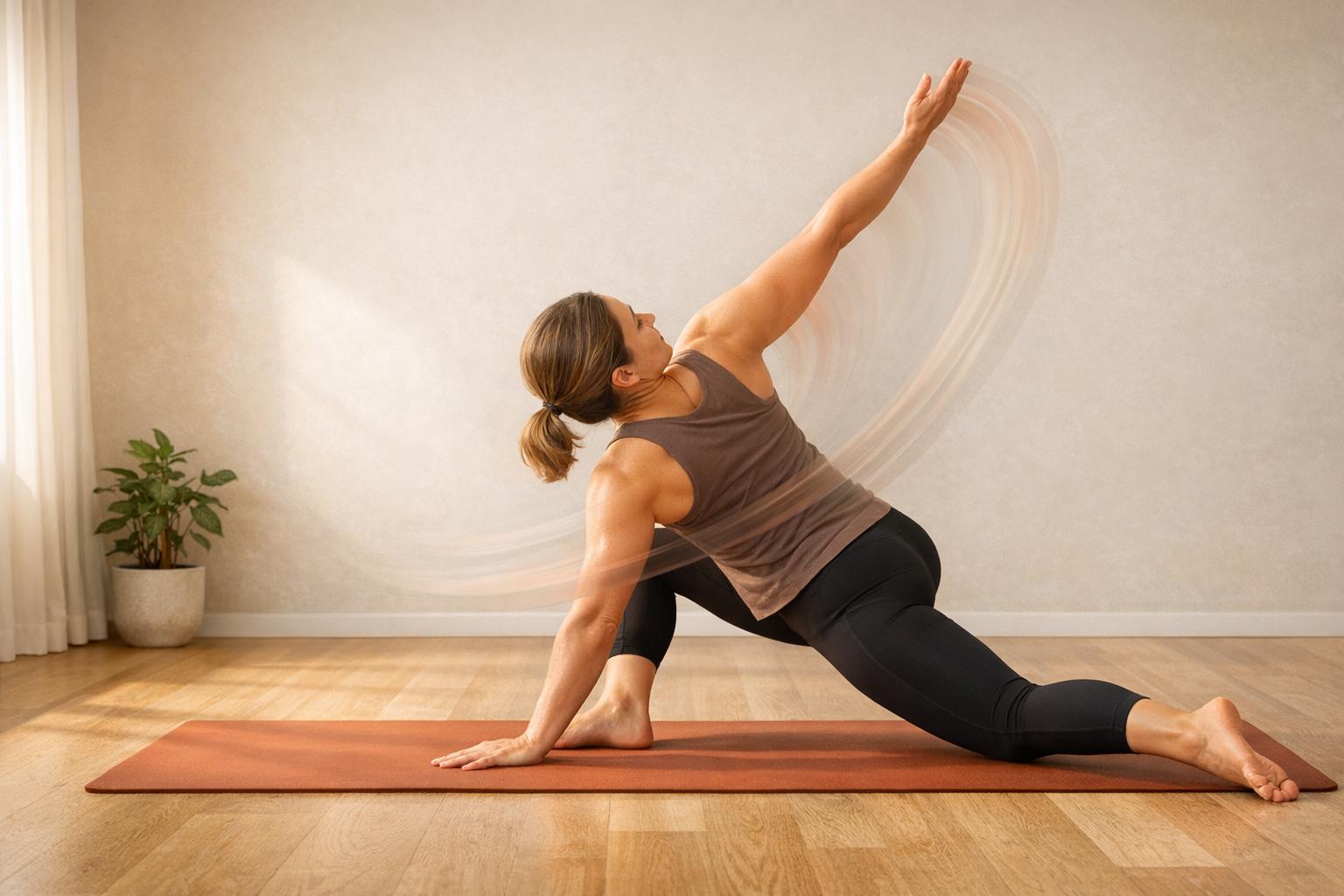
Flexible shoulders and a mobile thoracic spine are essential for overhead movements and pushing exercises. The World's Greatest Lunge is a multitasking drill that benefits both your hips and thoracic spine. Step into a lunge position, place your elbow inside your front leg, and rotate your opposite arm toward the ceiling [11, 12]. For mid-back mobility, try Thread-the-Needle rotations. Keep your hips stable and focus on slow, controlled spinal movement.
If you experience tightness in your chest, the Doorway Pec Stretch can help. Position your arms at different heights in a doorway to stretch various muscle fibres and avoid shoulder discomfort. Breathing deeply and exhaling fully during these stretches can help relax your nervous system and improve your range of motion [9, 11].
Posterior Chain: Deadlifts and Hamstring Flexibility
The hamstrings, glutes, and lower back are the powerhouses behind deadlifts and everyday bending. Prepare for hinging with Dynamic Hamstring Sweeps: bend at the hips with a straight spine, sweep your fingertips toward your toes, and then return to standing. For better spinal control, Jefferson Curls are an excellent choice - move one vertebra at a time, using a very light weight or no weight at all.
To build strength and stability, try Glute Bridges with March. Lift your hips and alternate raising each leg, focusing on maintaining control and engaging your glutes. Always ensure that any discomfort stays below a 3 out of 10 on a pain scale. If you feel sharp or pinching pain, reduce your range of motion or opt for a simpler variation [9, 11].
| Exercise Category | Volume | Technique Cue |
|---|---|---|
| Dynamic Drills | 8–12 reps per side | Move slowly; stay in control |
| Isometric Holds | 20–40 seconds | Build control at the end-range |
| Static Stretches | 20–40 seconds | Squeeze glutes to protect the back |
| Frequency | 3–6 days per week | Consistency over intensity; 5–20 min [9, 11] |
sbb-itb-4048306
Adding Mobility to Your Training Routine
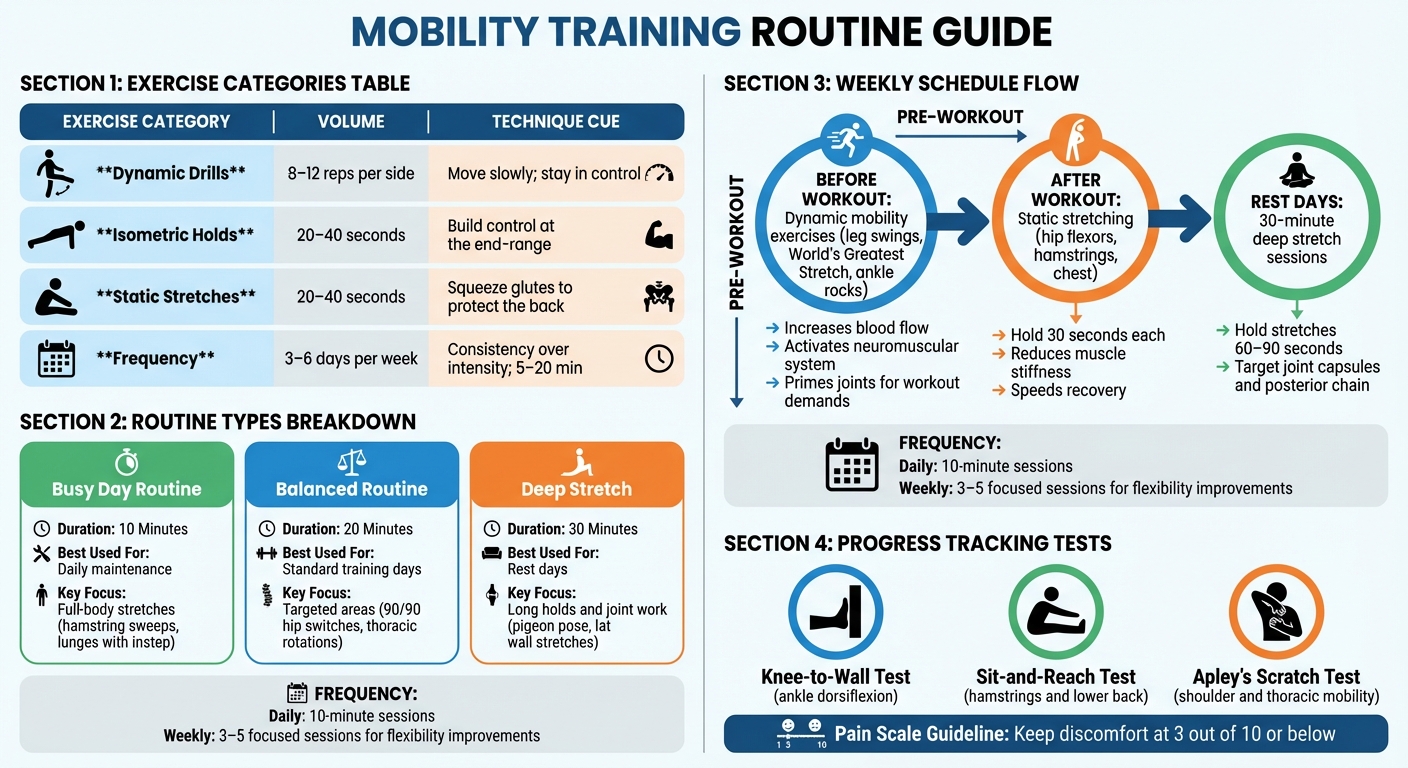
Complete Mobility Training Routine Guide with Exercise Categories and Weekly Schedule
Incorporating mobility exercises into your routine is all about consistency. Even a short, 10-minute daily session can make a difference over time. For more noticeable flexibility improvements, aim for 3–5 focused sessions each week.
Dynamic Warm-ups and Cool-downs
Dynamic mobility exercises are best done before your workout. These movements - like leg swings, the World's Greatest Stretch, or ankle rocks - help increase blood flow and activate your neuromuscular system in just a few minutes. This preparation not only primes your joints for the demands of your workout but also enhances your lifting mechanics. For example, better hip mobility allows for deeper squats, while improved thoracic mobility is key for overhead pressing.
On the other hand, static stretching is better suited for post-workout cool-downs or rest days. After training, focus on stretches targeting areas that feel tight, such as hip flexors, hamstrings, or your chest. Hold each stretch for about 30 seconds to help reduce muscle stiffness and inflammation, speeding up recovery between workouts.
These quick warm-up and cool-down routines are a great foundation, setting you up for longer, more focused mobility sessions on your off days.
Dedicated Mobility Sessions
For deeper flexibility and mobility work, plan longer sessions on your rest days. A 30-minute "deep stretch" session can target joint capsules and the posterior chain with exercises like banded hip distractions, pigeon poses, or Jefferson curls. To maximise flexibility gains, hold these stretches for 60–90 seconds - longer than the typical 20–40 seconds used during general recovery.
| Routine Type | Duration | Best Used For | Key Focus |
|---|---|---|---|
| Busy Day Routine | 10 Minutes | Daily maintenance | Full-body stretches (hamstring sweeps, lunges with instep) |
| Balanced Routine | 20 Minutes | Standard training days | Targeted areas (90/90 hip switches, thoracic rotations) |
| Deep Stretch | 30 Minutes | Rest days | Long holds and joint work (pigeon pose, lat wall stretches) |
Tracking Progress and Setting Goals
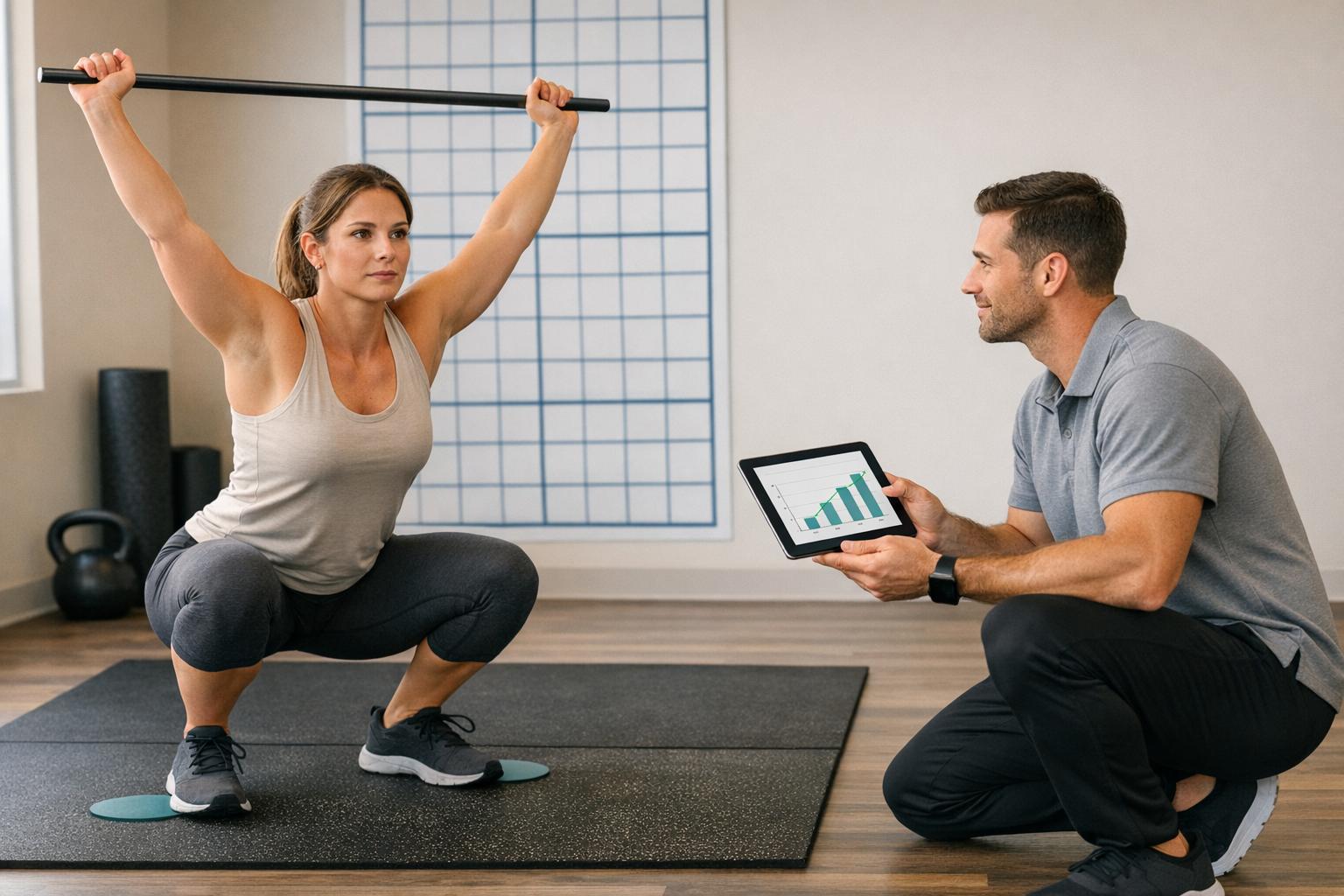
To ensure your mobility work is effective, track your progress regularly. Simple tests like the Knee-to-Wall Test (for ankle dorsiflexion), Sit-and-Reach Test (for hamstrings and lower back), or Apley's Scratch Test (for shoulder and thoracic mobility) can help you monitor improvements. When stretching, keep discomfort at a manageable level - no higher than 3 out of 10 - and use slow, controlled exhales to help ease into new ranges of motion.
Mobility at Well B Festival

The Well B Festival is where the concept of mobility moves from theory to action. Taking place from 3–5 April 2026 at Meydan Racecourse, Dubai, this three-day event is packed with activities across 16 unique zones. Each zone is tailored to help participants engage in movement, recovery, and connection, creating a hands-on experience that brings the ideas of mobility to life.
Bootcamps and Fitness Challenges
If you're ready to push your limits, the Buzz Camps area is the place to be. Here, you'll find bootcamp circuits and team challenges designed to improve your full-body mobility through functional exercises. Led by some of Dubai's top trainers, these sessions focus on movement that works for everyone. For those looking to test their strength and endurance, Hive Rocks offers a fitness arena inspired by Hyrox. Think of it as a battlefield where functional fitness meets grit, with challenges that demand flexibility and stamina.
The excitement continues at the Flight Deck Main Stage, which hosts "Classes for the Masses." These large-scale group fitness sessions combine music, movement, and expert coaching from star trainers. It's more than just exercise - it’s a high-energy, community-driven experience that makes mobility fun and accessible.
"Well B Festival delivers a unique blend of intense bootcamps, structured mobility challenges, and recovery strategies - combining exercise with dynamic programming for real results."
Recovery Zones and Mobility Workshops
After all the high-energy activities, recovery is essential. The Bee Well Zone offers a calming space for Pilates, meditation, and breathwork sessions. These practices are designed to help you reset and improve your body’s natural flow. Meanwhile, the RecoverBee Hub provides cutting-edge recovery tools and techniques, aimed at speeding up recovery and supporting joint health. These restorative options ensure you can keep up with the festival's physical demands while protecting your mobility gains.
Community and Expert-Led Sessions
Learning and connection are at the heart of the Well B Festival. Hive Minds Workshops feature talks and educational sessions led by movement science experts, focusing on efficient movement and injury prevention. For personalised advice, the Bee Healthy Zone offers one-on-one consultations with health professionals and biohacking services to address physical imbalances.
The festival isn't just about individual growth - it’s about building a community. Thousands come together to share knowledge, support each other, and elevate their approach to functional fitness. By blending expert advice, hands-on activities, and a vibrant community atmosphere, the Well B Festival shows how mobility can transform not just your fitness routine, but your overall well-being.
Conclusion
Mobility is at the heart of functional fitness. By focusing on strengthening stabiliser muscles, increasing joint flexibility, and moving through natural patterns, you're building strength that serves you in everyday life - not just at the gym. This approach helps you stay active as you age, lowers your risk of injuries, and ensures your fitness efforts have practical benefits beyond workouts.
Better mobility doesn't just improve your training; it makes daily activities easier and more efficient. The secret lies in consistency rather than intensity. Structure your routine around the seven key movements - push, pull, hinge, squat, lunge, rotate, and carry - and aim for three well-rounded sessions each week. Instead of chasing aesthetic goals, focus on how your body feels during everyday tasks and progress steadily.
For a hands-on experience, the Well B Festival at Meydan Racecourse (3–5 April 2026) offers a chance to explore mobility in action. With 16 unique zones, including expert-led workshops at Hive Minds and recovery tools at RecoverBee Hub, the event combines education, community, and practical movement. Early-access "Busy Bee" tickets are available now.
Make mobility a priority to maintain independence, improve athletic performance, and support your long-term health. Incorporate dynamic warm-ups, focus on movement quality, and connect with communities that encourage a healthier lifestyle - your joints and future self will appreciate it.
FAQs
How do I know if I need mobility or flexibility work?
If you're dealing with stiffness, aches, or restricted movement that interferes with your daily activities, incorporating mobility exercises into your routine can help. Mobility work focuses on improving your active range of motion, strength, and control, making everyday movements easier and more efficient.
On the other hand, if you experience muscle tightness or discomfort when stretching, flexibility exercises might be a better fit. These exercises aim to lengthen muscles and improve your ability to stretch comfortably.
For improving functional movement and alleviating pain, mobility exercises often provide greater benefits. However, combining both mobility and flexibility exercises can lead to better overall movement and fitness.
Which joints should I prioritise to improve my squat and deadlift?
To boost your squat and deadlift performance, work on increasing mobility in your hips, ankles, and knees. Pay extra attention to hip and ankle mobility, as these play a crucial role in reaching deeper positions and ensuring smoother, more efficient movements.
How can I add mobility without extending my workout time?
You can improve your mobility without extending your workout time by adding quick, focused exercises that target areas like your hips, hamstrings, shoulders, and thoracic spine. These exercises only take about 10–15 minutes and can be included as part of your warm-up, cool-down, or even as a standalone session. This method helps enhance movement and recovery while fitting easily into your schedule.