Functional Wellness Assessments for Fitness Goals
Functional wellness assessments are key to improving how your body moves and performs. These evaluations go beyond traditional fitness tests by focusing on movement patterns, stability, and mobility. They help identify hidden issues like muscle imbalances, limited mobility, and injury risks that can hold you back from reaching your fitness goals. By addressing these barriers, you can train smarter, avoid injuries, and make steady progress.
Key takeaways:
- Assessments evaluate movements like squatting, reaching, and lifting to spot weaknesses.
- Common tools include the Functional Movement Screen (FMS) and mobility tests.
- They identify issues such as knee valgus, tight muscles, or poor core stability.
- Results guide personalised training plans to improve strength, endurance, and control.
- Regular re-assessments every 4–6 weeks track progress and refine your plan.
In Dubai, the upcoming Well B Festival (3–5 April 2026) at Meydan Racecourse offers a chance to try these assessments. The event includes consultations, health checks, and fitness challenges. Tickets start at AED 195. Whether you’re a beginner or an experienced athlete, these assessments provide a structured way to overcome fitness plateaus and enhance your overall performance.
Unlock Your Potential: Functional Movement Screening for Improved Performance
sbb-itb-4048306
Barriers That Prevent Fitness Progress
Putting in consistent effort doesn’t always guarantee fitness progress. Sometimes, underlying issues like muscular imbalances, hidden injury risks, or endurance limitations can quietly hold you back. These barriers not only slow your gains but can also increase the risk of injury and lead to frustration.
Muscular Imbalances and Limited Mobility
When certain muscle groups become significantly stronger or tighter than their counterparts, imbalances develop. This can lead to issues like knees buckling inward during squats, rounded shoulders, or an exaggerated lower back arch during overhead movements. Restricted mobility in areas like the hips, ankles, or thoracic spine often prevents proper execution of fundamental movements such as deep squats. For example, poor thoracic spine mobility might show up as shoulder pain, while tight hamstrings or calves could contribute to lower back discomfort and inefficient running mechanics.
"A tight muscle is often responding to instability or dysfunction elsewhere in the chain. Pulling on it without understanding the source of imbalance can reinforce the body's compensatory strategy rather than resolve it." – Wellnest
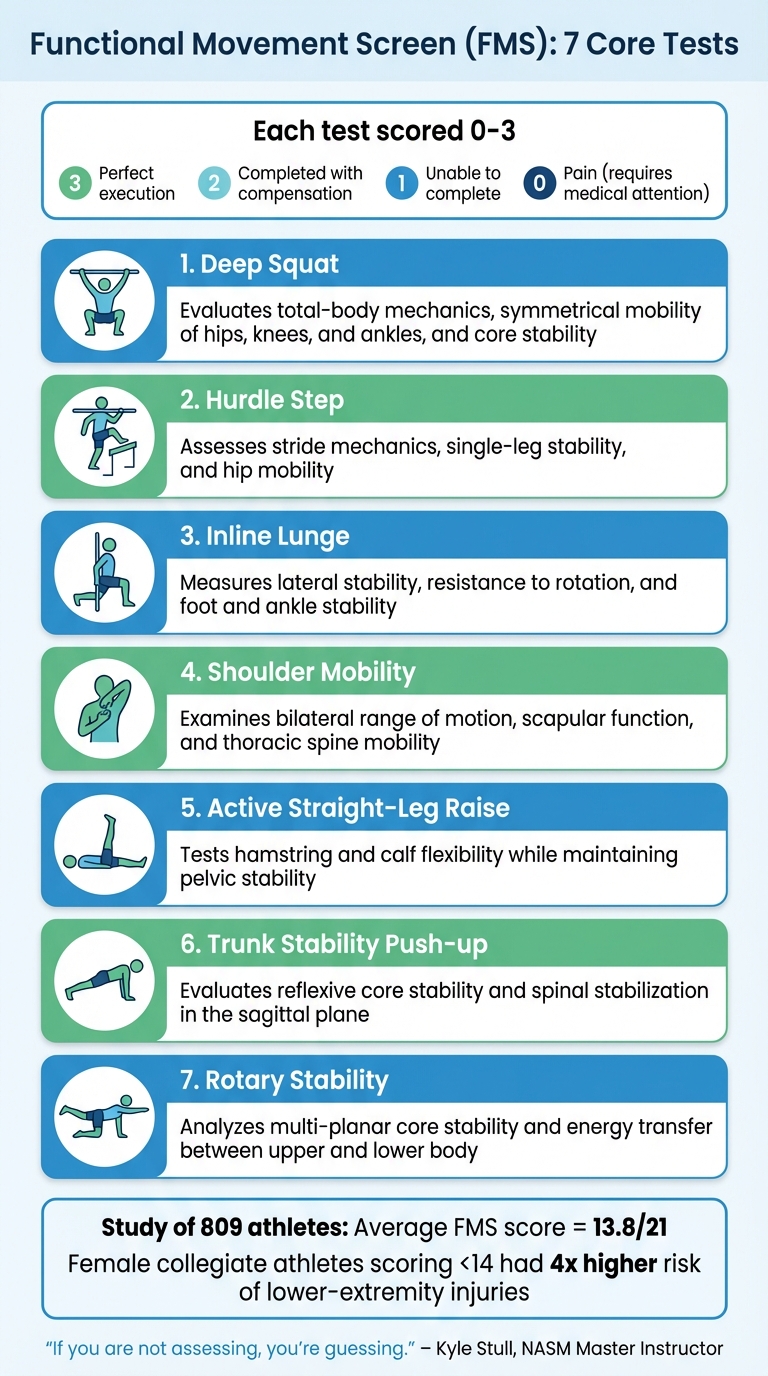
Tools like the Functional Movement Screen (FMS) can help identify these imbalances. In a study of 809 athletes, the average FMS score was 13.8 ± 2.5 out of 21. Female collegiate athletes scoring below 14 were found to have nearly four times the risk of lower-extremity injuries.
Unseen injury risks can add another layer of complexity to these imbalances.
Hidden Injury Risks
The absence of pain doesn’t necessarily mean your body is functioning optimally. Functional assessments often uncover subtle issues that might not be obvious. For instance, many people return to training after pain has subsided, unaware that they may still lack the stability or neuromuscular control needed for intense movements. The body operates as a connected system - hip instability can affect spinal alignment, and rounded shoulders can place extra strain on the neck and upper back.
"An injury occurs when the physical load placed upon tissues of the body outweighs the capacity of the tissues to tolerate that load." – Functional Training Institute
When certain muscles compensate for others, recurring tension can mask the original dysfunction. Some issues only become apparent under stress - for example, a slight knee valgus seen during rest may turn into a significant risk factor under fatigue. Without addressing these patterns, increasing weight or intensity might just reinforce these compensations rather than resolving them.
Endurance Limitations and Fitness Plateaus
Misalignment in the body can lead to fitness plateaus by altering how muscles function. This often causes stabilising muscles to "switch off". Poor posture, like a slouched ribcage, limits diaphragmatic expansion, reducing oxygen intake during exercise. This not only increases muscular tension but also lowers movement efficiency, making you tire out faster. When fatigue sets in, movement quality tends to break down, and assessments can help pinpoint whether the issue lies in raw strength or muscular endurance deficits. Additionally, low back pain remains a common issue, affecting millions globally.
"Implementing functional assessments can lead to breakthroughs with clients who have struggled to find solutions to aches, pains, and strength plateaus." – Exercise Therapy Association
Overcoming these barriers isn’t about pushing harder - it’s about understanding where your body is compensating and why. Identifying these issues allows for targeted assessments and smarter training strategies that can help you move forward effectively.
What Functional Wellness Assessments Measure
Functional Movement Screen (FMS) 7-Test Assessment Guide
Functional wellness assessments focus on how well your body moves, not just how strong or fast you are. They evaluate how you perform everyday actions like squatting, stepping, lunging, or reaching by analysing your movement mechanics, coordination, and control. These assessments examine three main factors:
- Mobility: How well your joints move through their full range of motion.
- Stability: Your ability to control joints and prevent unwanted movements.
- Motor Control: How your brain coordinates these elements to create smooth, efficient movements.
The primary aim is to spot "weak links" in your body's kinetic chain before they lead to injuries. For instance, the assessments look at five key areas: the foot and ankle, knee, lumbo-pelvic-hip complex (LPHC), shoulders and thoracic spine, and head and neck. They also identify asymmetries - differences in movement quality between your left and right sides - which can cause compensatory patterns and overuse injuries. This detailed analysis sets the stage for targeted corrective strategies to help you overcome fitness challenges.
Main Assessment Components
To break it down further, these assessments use structured methods to measure movement quality. A well-known example is the Functional Movement Screen (FMS), which includes seven specific tests to evaluate movement patterns. Each test is scored on a scale from 0 to 3, where 3 indicates perfect execution and 0 signals pain or inability to perform, requiring immediate medical attention.
| FMS Test | Primary Function |
|---|---|
| Deep Squat | Evaluates total-body mechanics, symmetrical mobility of hips, knees, and ankles, and core stability. |
| Hurdle Step | Assesses stride mechanics, single-leg stability, and hip mobility. |
| Inline Lunge | Measures lateral stability, resistance to rotation, and foot and ankle stability. |
| Shoulder Mobility | Examines bilateral range of motion, scapular function, and thoracic spine mobility. |
| Active Straight-Leg Raise | Tests hamstring and calf flexibility while maintaining pelvic stability. |
| Trunk Stability Push-up | Evaluates reflexive core stability and spinal stabilisation in the sagittal plane. |
| Rotary Stability | Analyses multi-planar core stability and energy transfer between upper and lower body. |
In addition to the FMS, other assessments measure strength, endurance, and flexibility. For example:
- The 30-Second Sit-to-Stand Test evaluates lower-body strength.
- Mobility tests, like the Sit-and-Reach Box, assess flexibility.
- Cardiovascular fitness is checked using tools like the 3-Minute Step Test.
- Body composition analysis, using devices like InBody, provides insights into metrics such as body fat percentage, lean mass, and BMI.
Personalised Data for Fitness Planning
These assessments do more than highlight movement flaws - they provide actionable insights. Trainers use the results to categorise movements into three groups:
- Movements you perform well and can integrate into performance training.
- Movements requiring corrective exercises to improve quality.
- Movements that break down under fatigue, indicating the need for fitness and endurance work.
This tailored approach ensures your programme addresses your unique needs rather than relying on a one-size-fits-all plan.
"If you are not assessing, you're guessing." – Kyle Stull, Master Instructor, NASM
For example, a stiff hip might cause your lower back to round during a squat. Catching these subtle issues early can prevent injuries and help adjust your training volume and frequency to match your current capacity. This way, your workouts remain challenging yet safe, keeping you on track without risking overtraining.
How Assessments Address Fitness Barriers
Identifying Weaknesses and Compensation Patterns
Functional assessments bridge the gap between what your body should do and what it actually does. For example, passive range of motion (ROM) measures how far a joint moves with assistance, while active ROM shows how far you can move it on your own. If there’s a big difference between the two, it could signal poor neuromuscular control and an increased risk of injury during exercises that involve added weight.
Static postural analysis takes a closer look at your body’s alignment when at rest, focusing on five key areas: ankles, hips, pelvis, thoracic spine/shoulders, and head. For instance, an anterior pelvic tilt (where the pelvis tilts forward) often means tight hip flexors are working overtime with overactive lower back muscles. This creates a compensation loop, where your lower back takes on extra strain due to limited hip mobility.
Assessments also highlight the difference between raw strength and effective muscle activation. Even athletes like powerlifters, who can lift impressive amounts, may struggle with functional tests if their muscles aren’t firing in the right order. According to the Exercise Therapy Association:
"Function... means you can activate your muscles in the correct pattern when you need them to, providing stability and strength under stress, force, or load".
Here’s a breakdown of common postural issues and their associated muscle imbalances:
| Postural Observation | Weak/Inhibited Muscle | Tight/Overactive Muscle |
|---|---|---|
| Anterior Pelvic Tilt | Rectus Abdominis, Gluteals | Hip Flexors, Erector Spinae |
| Knee Valgus (Buckling) | Hip Abductors (Gluteus Medius) | Adductors |
| Forward Head Position | Deep Cervical Flexors | Cervical Extensors |
| Scapular Winging | Serratus Anterior | Pectoralis Minor |
By identifying these imbalances, trainers can address fitness barriers and pave the way for better performance. These insights form the foundation for personalised exercise plans.
Creating Targeted Exercise Solutions
Once weaknesses are identified, trainers can develop corrective strategies tailored to your needs. The process typically follows a five-step progression: restoring function and mobility first, then advancing to bodyweight exercises, adding resistance, and finally building strength, power, and advanced motor control.
For example, if an assessment highlights core instability during a trunk stability push-up test, your trainer might introduce exercises like bird dogs, side planks, or stability ball routines. On the other hand, if a deep squat test reveals knee valgus (where the knees buckle inward), the focus might shift to strengthening the hip abductors with exercises such as glute bridges and step-ups.
Regular re-assessments every 4–6 weeks ensure that your programme evolves as your functional abilities improve.
"Implementing functional assessments can lead to breakthroughs with clients who have struggled to find solutions to aches, pains, and strength plateaus." – Exercise Therapy Association
Tracking Your Progress Over Time
Regular Re-Assessments for Continued Progress
Tracking your progress isn’t just about checking off boxes - it’s about understanding how far you’ve come and where you can go next. Functional assessments aren’t meant to be a one-time deal; they work best when revisited regularly. By doing periodic evaluations, you get a clear picture of your progress over time, whether you’re just starting out or looking to fine-tune your performance. Beginners often notice quick improvements that build confidence, while seasoned athletes can identify those tiny but crucial gains that help push past plateaus.
Keeping tabs on your strength, mobility, and endurance gives you a complete view of your fitness journey. Plus, seeing measurable progress can be a powerful motivator. As Charlie Banfield from Function Fitness puts it:
"Love it or hate it, tracking where your fitness is can be a huge tool for dragging you through the days when it's a little more challenging to get off the sofa".
Regular re-assessments also allow you to adjust your strategies to address specific weaknesses or limitations you’ve identified. Monthly check-ins can help maintain your momentum, while quarterly reviews provide a broader look at your long-term progress. Banfield explains:
"We know if we can keep you in fitness for 2 years, we can change your life. After two years of being with us, you'd have built habits that'll last a lifetime".
These evaluations not only validate your hard work but also open doors to community-based assessments that can add a fun, competitive edge to your fitness journey.
Assessment Opportunities at Well B Festival
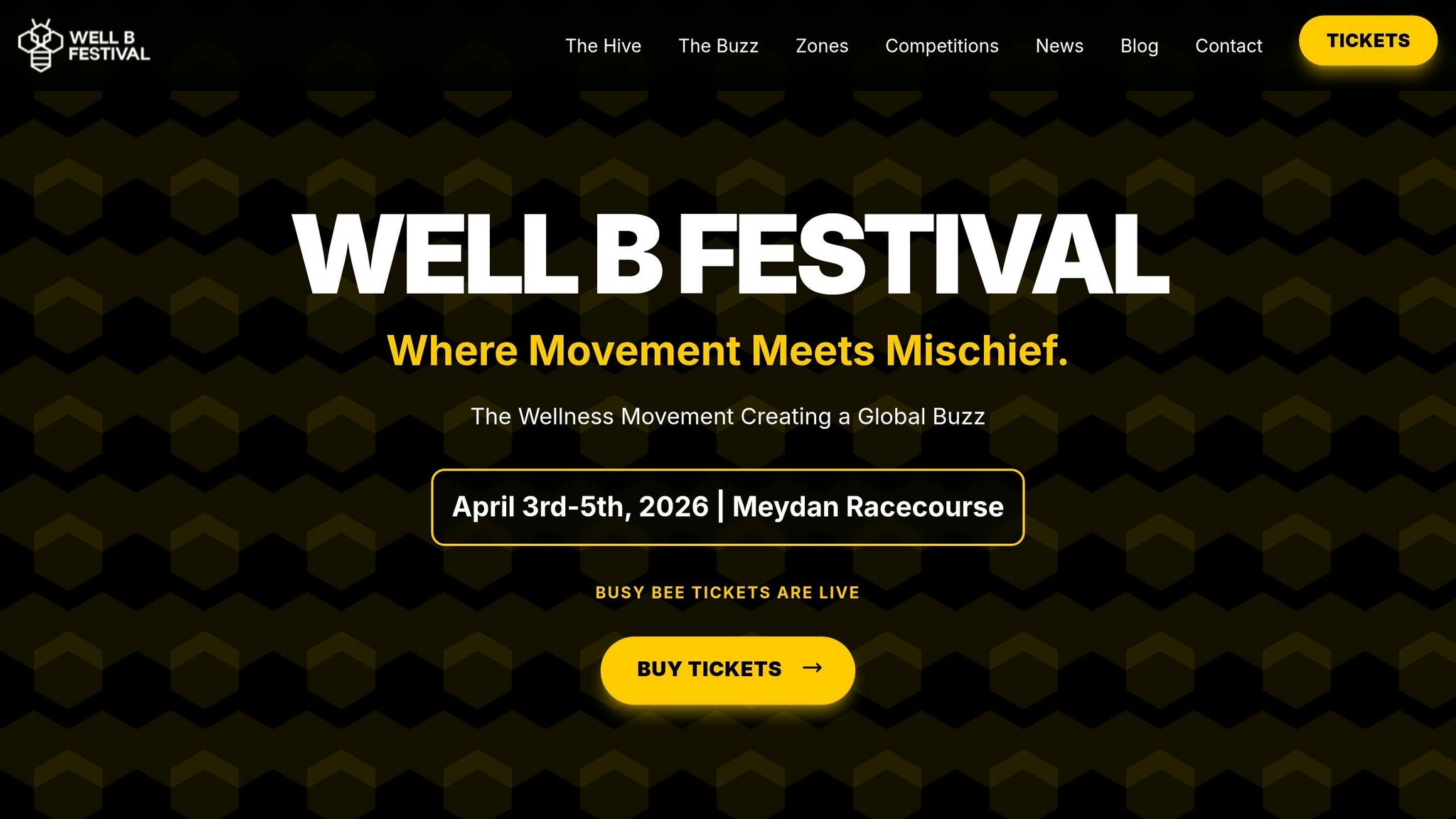
If you’re looking for a unique way to assess your progress, the Well B Festival offers a hands-on opportunity. Happening from 3–5 April 2026 at Meydan Racecourse, the festival combines wellness and fitness assessments in an engaging environment.
In the Bee Healthy zone, you’ll find science-backed health checks like blood testing and biohacking evaluations. You can also sit down with top health professionals for personalised consultations to help interpret your results and refine your wellness plan.
For those who love a challenge, the Hive Rocks zone offers Hyrox-inspired strength and endurance tests, letting you measure your functional fitness against others in the community. And after all that effort, the RecoverBee zone provides recovery tools like ice baths, infrared saunas, and compression therapy to keep you feeling your best.
Early Bee tickets for this exciting event are available now, with prices ranging from AED 195 to AED 1,545. It’s a chance to track your progress, connect with others, and take your fitness journey to the next level.
Conclusion: Reaching Your Fitness Goals Through Functional Assessments
Functional assessments dig deeper than generic workout plans, exposing hidden imbalances and obstacles that might be holding you back. Whether it’s muscular imbalances, movement compensations, or those frustrating plateaus, these evaluations spotlight the issues that often go unnoticed. By focusing on how your body moves - rather than just how much weight you can lift - you gain a tailored plan that addresses your unique needs while reducing the risk of injury.
Scheduling regular assessments every 4–6 weeks helps you monitor improvements in strength, mobility, and endurance. This consistent check-in allows for precise tweaks to your training as your body adapts. As the Exercise Therapy Association explains:
"Implementing functional assessments can lead to breakthroughs with clients who have struggled to find solutions to aches, pains, and strength plateaus".
These evaluations do more than optimise your workouts - they contribute to your overall health and independence. Strong results in tests like grip strength and the Floor Transfer Test are linked to better long-term mobility and lower health risks. By prioritising movement quality and proper alignment, you’re building a foundation for a body that performs well now and stays resilient in the future.
If you’re ready to take action, the Well B Festival (3–5 April 2026, Meydan Racecourse) offers the perfect opportunity. With professional assessments, expert consultations, and interactive fitness challenges, you can test your progress, refine your goals, and elevate your wellness journey. Early Bee tickets are on sale now - don’t miss out!
FAQs
Do I need a functional assessment if I’m not in pain?
Functional assessments aren't just for those dealing with pain. They offer insight into your movement patterns, highlighting areas of strength and pinpointing weaknesses. This can help you work on improving mobility, reducing the chance of injuries, and boosting performance. Taking this proactive step contributes to maintaining long-term fitness and supporting overall well-being.
How do assessment results change my workout plan?
Assessment results help shape your workout by pinpointing your strengths and areas that need improvement. This personalised approach means your exercises are aligned with your specific needs, helping you make progress more effectively while reducing the chance of injuries. By gaining insight into your fitness profile, you can zero in on your goals and work towards them in a focused, efficient way.
Can I do a functional assessment at Well B Festival?
Functional assessments are part of the offerings at the Well B Festival. This event centres around movement and health, making it an ideal setting to explore the benefits of functional wellness evaluations. It's a great chance to incorporate these assessments into your journey towards better fitness and overall well-being.